Those mages who honor the Maker and keep His laws we welcome as our brothers and sisters. Those who reject the laws of the Maker and the words of His prophet are apostate. They shall be cast out, and given no place among us.
—From The Sermons of Justinia I[1]
Apostates are mages who are not part of the Circle of Magi and are thus considered "rebel mages."[2] There are two main types of apostates: hedge mages and general apostates, who were never part of the Circle, and rogue mages, who have fled from the Circle. The Templar Order is charged with finding apostates and either capturing or killing them. Maleficarum are a branch of apostate mages considered most dangerous.
Background
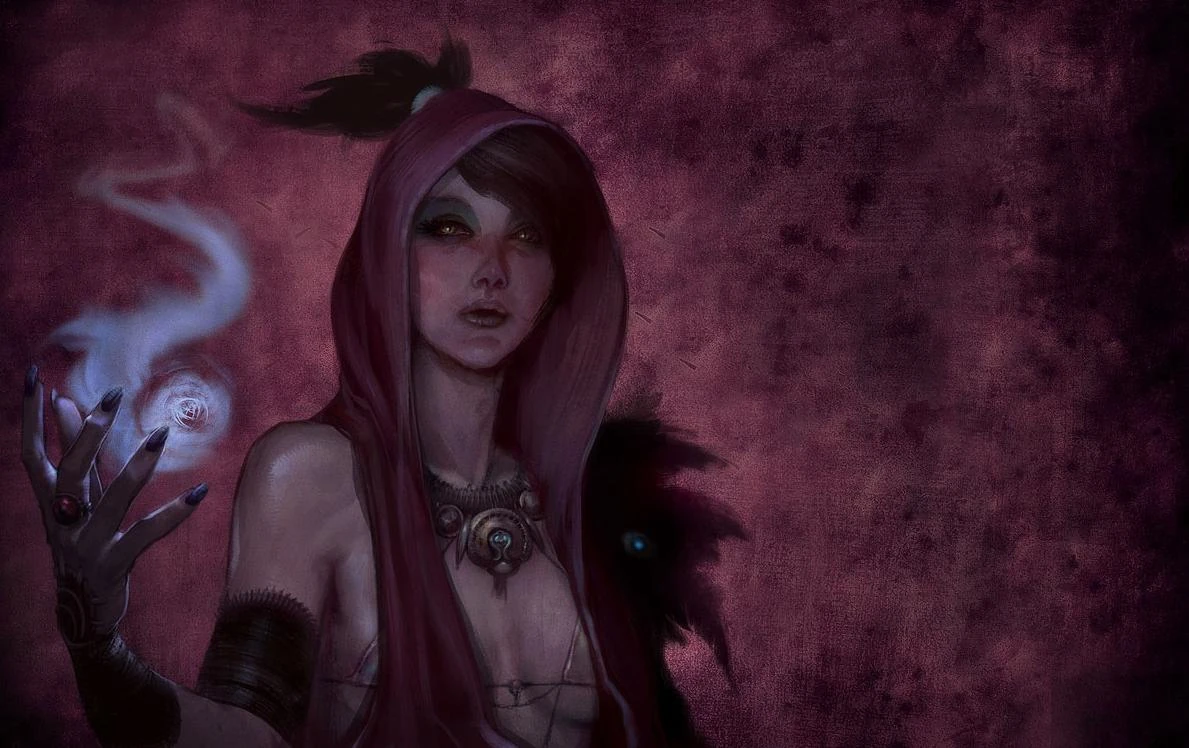
Morrigan, an apostate and Witch of the Wilds
Once, the term only described mages who willfully left the Circle of Magi and the path the Chantry had dictated for them. However, as the Andrastian Chantry is the dominant religion in Thedas, the Chantry expects everyone born in Thedas to follow the faith. Any mages outside the Circle are thus regarded as heretics, and labelled apostate. The Chantry believes that apostates are at greater risk of being possessed by demons and becoming abominations.
Regardless of why a mage is considered an apostate, they are hunted by Templars and, if caught, usually executed. Occasionally, they are made Tranquil instead, becoming unfeeling slaves for the Circle.[3]
Institutional apostasy
Despite the dominance of the Andrastian Chantry, a number of factions throughout Thedas are known for supporting what technically constitutes as apostasy within their ranks. Though templar attention is expected, the contrary can occur, and the reasoning tends to be myriad, ranging from these factions either being able to oppose the Chantry's will militarily or even gaining immunity through diplomatic conventions.
Tevinter Imperium
The Tevinter Imperium is often reviled by outsiders to be a nation rank with heresy and apostasy due to the magocracy that rules over it. In 3:87 Towers, Divine Joyous II would declare all of Tevinter to be guilty of heresy for rejecting the second verse of Canticle of Transfigurations in the Chant of Light, "magic exists to serve man, and never to rule over him." This would prompt a schism within the Andrastian faith and lead to the founding of the Imperial Chantry.[5][6] Four Exalted Marches against the Tevinter Imperium would occur between 4:40 Black and 5:10 Exalted, though each would fail to topple Tevinter's magocracy and only cemented the divisions between Minrathous and Val Royeaux.[7] Additionally, mages from southern lands would flee in favor of settling in Tevinter, bolstering the empire's waning power.[7]
Avvar Shamans
Avvar shamans and augurs commune with spirits (who the Avvar view as gods) on behalf of their tribes for guidance and protection from hostile spirits. An augur gives council to the Thane of the hold, other shamans, and identifies spiritual threats.[8] Shamans receive training in their magic from both augurs and spirits they purposefully allow to possess them, technically becoming abominations, and are expected to release the spirit at their training's end. However, the Avvar are aware of the risk posed by fully realized abominations, so when the spirit becomes hostile and corrupts the host, the latter is killed.[9] The traditions of Avvar Hedge magic are passed down from generation to generation, as with the "shamans" of the Avvar barbarians.[3]
Due to the Avvar's relative isolation and the inhospitable environment of the Frostback Mountains, they are largely left alone by the Chantry, and the Avvar are likewise unwelcoming to the faith and templars.
Dalish Keepers
Dalish elven mages including the clan keepers and their apprentices are considered apostates. However, they are left alone as long as the clan remains isolated and limits their number of members who have magic. Often, templars won't pursue Dalish clans since they largely stay away from human civilization,[10] and the few clans (such as Clan Lavellan) that do trade with humans refrain from lingering long enough to attract negative attention.
Qunari Saarebas
Although Saarebas are controlled by the Qunari and typically reside on Par Vollen, the Chantry also treats them as apostates.[citation needed] However, the tentative peace brought by the Llomerryn Accords in 7:84 Storm, signed by the Qunari and all human nations (sans Tevinter),[11] likely ensured that clashes between Saarebas and Chantry-aligned forces would be limited following the Exalted Marches against the Qunari.
Grey Wardens
Mages within the Grey Wardens are technically apostates, but are granted reprieve from templar attention and free of the confines of the Circle upon recruitment (so they may battle the darkspawn unfettered).[12] The harboring of apostates—even blood magic practicing maleficarum—is a point of contention between the two orders, and is only tempered by its relative rarity, due to the Wardens' conservative recruitment standards. Nonetheless, the Wardens are expected to act appropriately if a mage grows beyond their control, else the templars consider the mage's immunity forfeit. In addition, the templars also keep the phylacteries of the mages who join the Wardens for good measure.
Witches of the Wilds
Witches of the Wilds constitute an enigmatic group of apostates that inhabit the Korcari Wilds.
Chasind Hedge Mages
Chasind tribes are led by shamans that are said to be like the mages that live amongst the Avvars. There are many tales of these shamans having learned their magic from the Witches of the Wilds.[13] The traditions of Chasind Hedge magic are passed down from generation to generation, as with the so-called "witches" of the Chasind wilders.[3]
Free Marches Champions
Apostates who gain the favor of influential and powerful political figures may also be granted the same pardons if the apostate's arrest would be considered too impolitic. An example of such rare occurrences would be apostate Champions of influential city-states within the Free Marches.
Spirit Warriors
Spirit Warriors tend to be seen as apostates by templars;[14] although they are not mages and they deal with benevolent spirits, these distinctions are almost entirely lost in favor of caution.
Hedge magic
- Main article: Hedge magic
Hedge magic is a form of magical expression different than that of typical mages. Hedge mages are untrained magic-users who wield powers developed outside of conventional teaching[2]. Some of these hedge mages are not even aware of their nature.
Maleficarum
- Main article: Maleficar
Maleficarum actively pursue dangerous and forbidden schools of magic, including blood magic.[2] Many apostates do not practice forbidden schools of magic, but the stigma is so intense that most apostates are looked upon as maleficar.
Notable apostates
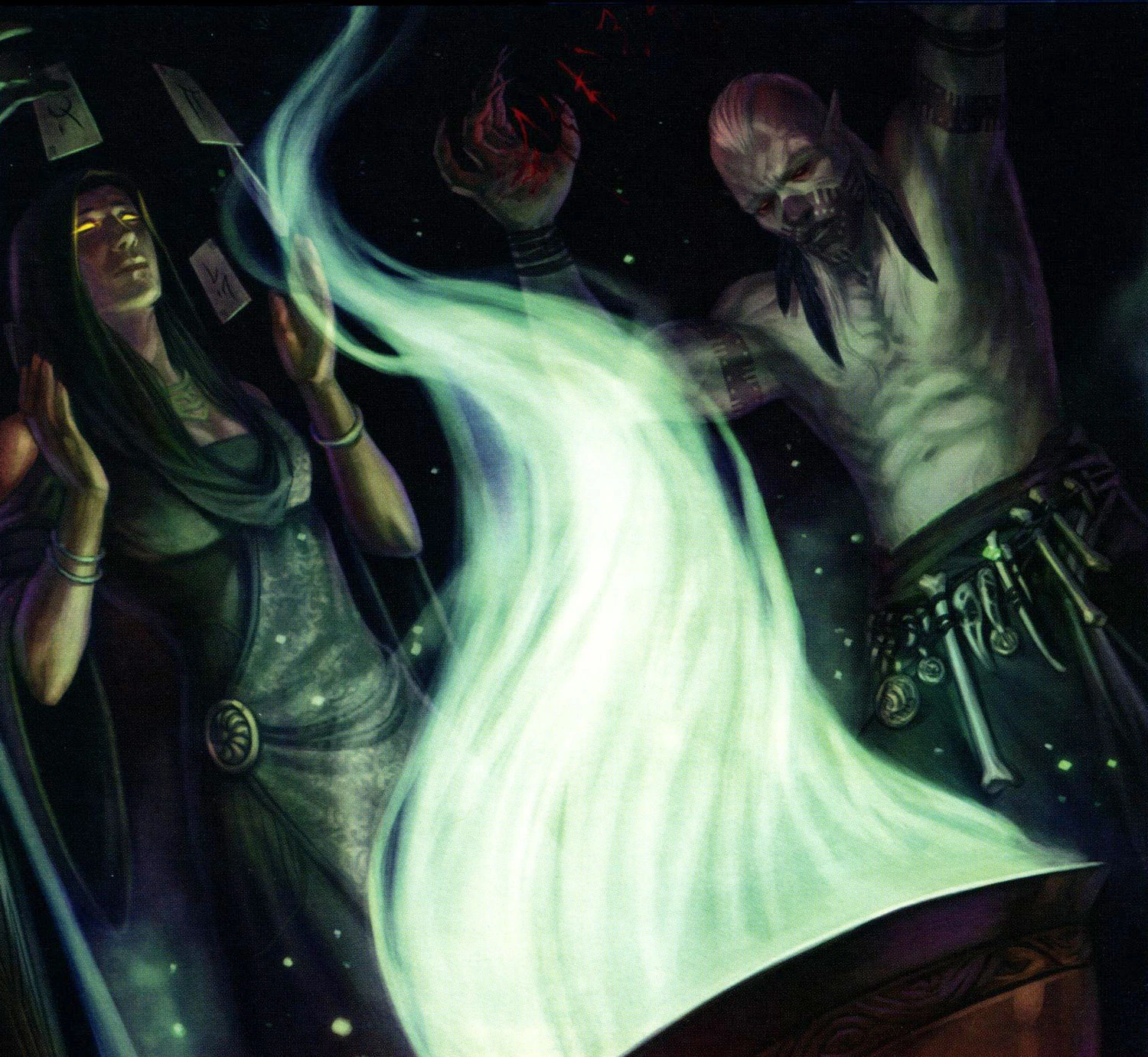
Apostate mages[15]
Apostate Wanderer in Heroes of Dragon Age
- For a complete list, see Category:Apostates.
- Adain[16]
- Aldenon
- Anders
- Baroness
- Bethany Hawke
- Caleth[17]
- Ceridweth – an infamous apostate who was eventually captured and made Tranquil[18]
- Connor Guerrin
- Felassan
- Fell Orden
- Feynriel
- Flemeth
- Hawke – if they are a mage
- The Inquisitor – if they are a mage of Elven or Qunari origin
- Jowan
- Lanaya
- Lysas
- Marethari
- Malcolm Hawke
- Merrill
- Morrigan / The Scornful Sorceress
- Sketch
- Solas
- Velanna
- Veness
- Yavana
- Zathrian
Codex entries
 An Honest Answer Regarding Apostates
 Apostates
- Apostate's Courage
- Cold-Blooded
- The Hedge Witch
- Maleficarum Regrets
- The Seekers of Truth
- The Spiral Eye
- Staff of Violation
References
- ↑ Codex entry: Maleficarum
- ↑ 2.0 2.1 2.2
 Dragon Age: The World of Thedas, vol. 1, p. 105
- ↑ 3.0 3.1 3.2 Codex entry: Apostates
- ↑ Epilogue (Trespasser)
- ↑ Based on the Imperial Reinforced Gloves description. This growing rift becomes known as "the Schism".
- ↑ Dragon Age: The World of Thedas, vol. 1, p. 88
- ↑ 7.0 7.1 Dragon Age: Origins: Prima Official Game Guide, p. 344
- ↑ Dialogue with the Augur.
- ↑ Conversation with The Augur about their training practices.
- ↑ According to Merrill's dialogue in Long Way Home
- ↑ Codex entry: The Llomerryn Accords
- ↑ According to banter between Vivienne and Iron Bull after Here Lies the Abyss
- ↑ Codex entry: The Chasind
- ↑ Dragon Age RPG, Core Rulebook, p. 73
- ↑ Dragon Age RPG Player's Guide, set 2, pg. 59.
- ↑ Codex entry: Cold-Blooded
- ↑ Codex entry: Apostate's Courage
- ↑ Codex entry: The Spiral Eye
| ||||||||||||||||||||


